

The results and discussion chapters are where you share the outcomes of your research and explain what they mean. A well-structured discussion links your findings back to your research questions and the broader context of your field.
Presenting Your Results
- Use visuals: Tables, graphs, and charts help communicate trends and comparisons.
- Stay objective: Let your data speak for itself without personal bias.
- Be clear: Highlight key patterns and important differences.
Structuring the Discussion
- Link to objectives: Discuss how your findings answer your research questions.
- Compare with literature: Show how your findings confirm or challenge existing research.
- Discuss limitations: Be honest about what your study did not cover.
- Suggest future directions: Offer ideas for further research.
Common Pitfalls to Avoid
- Repeating results in the discussion without interpretation.
- Overstating the significance of minor findings.
- Ignoring inconsistencies or unexpected results.
Need Help Writing Your Results or Discussion?
At UTAFITI BORA, we help you turn your data into clear, insightful results and discussions that strengthen your thesis.
Reach out today to craft compelling and well-supported chapters.
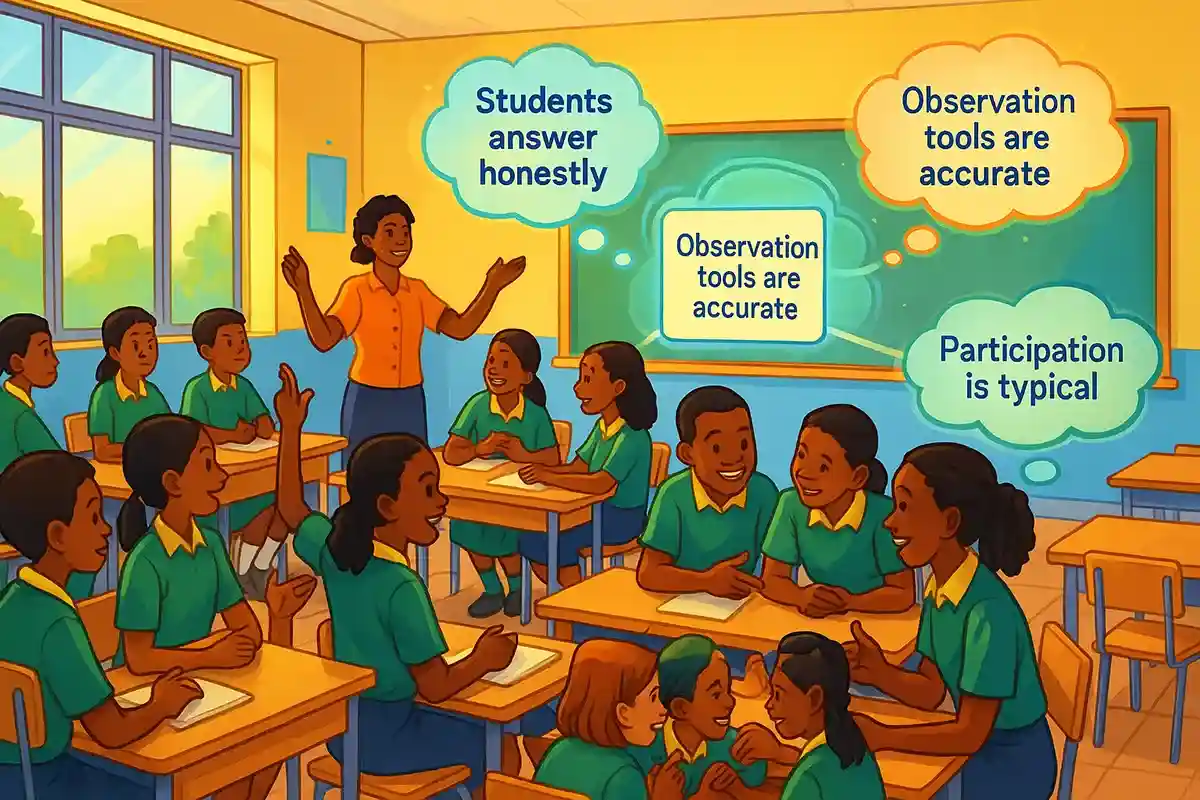 Understanding Research Assumptions: Insights from Seating and Participation in Nairobi Schools
 How to Write the Scope of the Study in Academic Research (With Example)
 Justification of the Study: A Practical Guide with Examples